
What Really Happens to Your Waste at International Towers
Why seeing the process firsthand is changing behaviours across the precinct
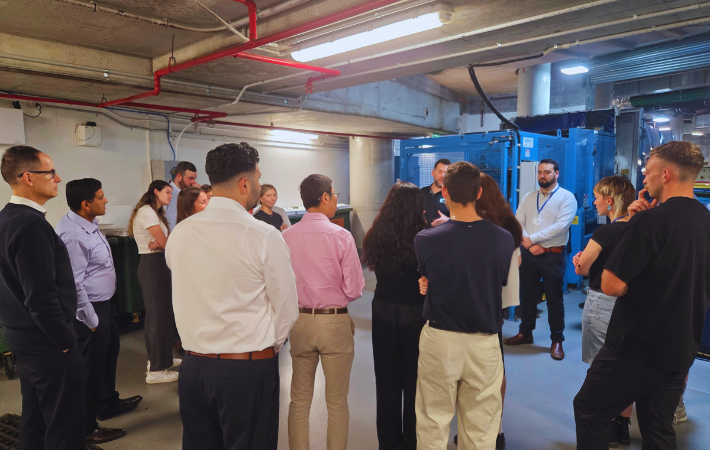
At International Towers, sustainability isn’t just a strategy, it’s something you can see, experience and be part of. Each month, tenants are invited behind the scenes for a guided Waste Tour, offering a rare, on-the-ground look at what really happens after you dispose of your waste. What many discover is far more complex, and far more impactful, than they expected.
For those attending for the first time, the tour is an immersive, hour-long walkthrough of the precinct’s waste and sustainability operations. Participants are taken through the full lifecycle of waste at Barangaroo, from collection through to processing, while also uncovering some of the lesser-known systems powering the precinct, including the Harbour Heat Exchange and on-site water recycling plant. “It’s about showcasing what happens beneath Barangaroo,” explains Roberto Machado, Operations & Technology Executive Manager at Dimeo Cleaning Services. “We walk people through each stage of waste processing and share the systems that support it, along with a few fun facts along the way.”
One of the most eye-opening parts of the tour is understanding what happens after waste leaves a tenant’s bin. Waste is collected and the bags are Segregated per stream using dedicated tenancy trolleys, before being transferred to centralised collection points. From there, it undergoes visual inspection to identify contamination, is directed into the appropriate waste streams, and transported to the basement for processing. Bins are weighed, assessed, and where possible, materials are recovered before being compacted. Behind the scenes, automation plays a significant role. “About 90% of our waste system is automated,” says Roberto. “With over 1,300 bins onsite and more than 700 processed daily, technology like bin beacons helps us track and manage waste efficiently while reducing human error.”
Despite the advanced systems in place, one of the most persistent challenges is contamination. “When waste reaches us heavily contaminated, it’s often too late to recover,” Roberto explains. “That’s one of the key reasons we run these tours, to help people understand the impact of getting it right at the source.”
Common issues include:
- Compostable packaging placed in food bins
- Food waste left inside recyclable packaging
- Coffee cups not emptied before disposal
- Dry waste bins being used as general waste
These small, everyday habits can significantly impact the effectiveness of the entire system.
For Lewis Rowland-Coman, Principal Consultant at Foresight Environmental, the Waste Tour plays a critical role in bridging the gap between strategy and behaviour. “The Waste Tour makes sustainability tangible,” he says. “It helps tenants understand how their actions directly influence outcomes like waste diversion and contamination rates.” Many attendees arrive with misconceptions, particularly the belief that waste is sorted later regardless of how it’s disposed. “In reality, contamination has a direct impact on whether materials can be recovered,” Lewis explains. “Improving separation at the source leads to measurable improvements in recycling and organics, and reduces the amount sent to dry waste.”
While reports and signage play an important role, nothing compares to seeing the process firsthand. “People are often surprised by what happens behind the scenes,” says Roberto. “Many assume everything ends up in the same place. When they see the level of detail and effort involved, it completely changes their perspective.” This visibility is key to driving behavioural change. “Seeing the system in action builds a sense of ownership,” adds Lewis. “It reinforces that every individual action contributes to a much bigger outcome.”
At its core, the success of the waste management system at International Towers depends on its tenants. “They are the key to making the system work,” says Roberto. “If waste is disposed of correctly from the start, it makes the entire process more efficient and effective.” Lewis agrees, highlighting that consistent behaviours across teams present one of the biggest opportunities for improvement. “Small changes, applied consistently, can significantly reduce contamination and improve overall performance across the precinct.”
As International Towers continues to evolve its sustainability initiatives, the Waste Tour remains a powerful tool for engagement and education. “There’s an opportunity to expand participation and use data and digital tools to further influence behaviour,” says Lewis. “The more people who understand the process, the greater the impact we can achieve together.”
Curious to see what happens behind the scenes? Step beyond the bins and discover how your everyday actions contribute to a more sustainable future at International Towers.
Book your place on the next Waste Tour and be part of the change.
About Dimeo Cleaning Services
Dimeo Cleaning Services plays a critical role in the day-to-day waste operations at International Towers, managing the collection, inspection and processing of waste across the precinct. With a strong focus on efficiency and innovation, their team combines hands-on expertise with advanced automation systems, including bin beacon technology, to manage over 700 bins daily.
Through visual inspections, contamination control and recovery processes, Dimeo helps ensure waste is directed into the correct streams, supporting higher diversion rates and more sustainable outcomes across Barangaroo.
About Foresight Environmental
Foresight Environmental provides strategic sustainability guidance and environmental consulting to support International Towers’ waste management and broader sustainability goals.
Working closely with tenants and operational teams, Foresight delivers waste audits, reporting and targeted education programs designed to reduce contamination and improve source separation. Their work helps translate sustainability strategy into measurable outcomes, driving continuous improvement and long-term environmental performance across the precinct.